
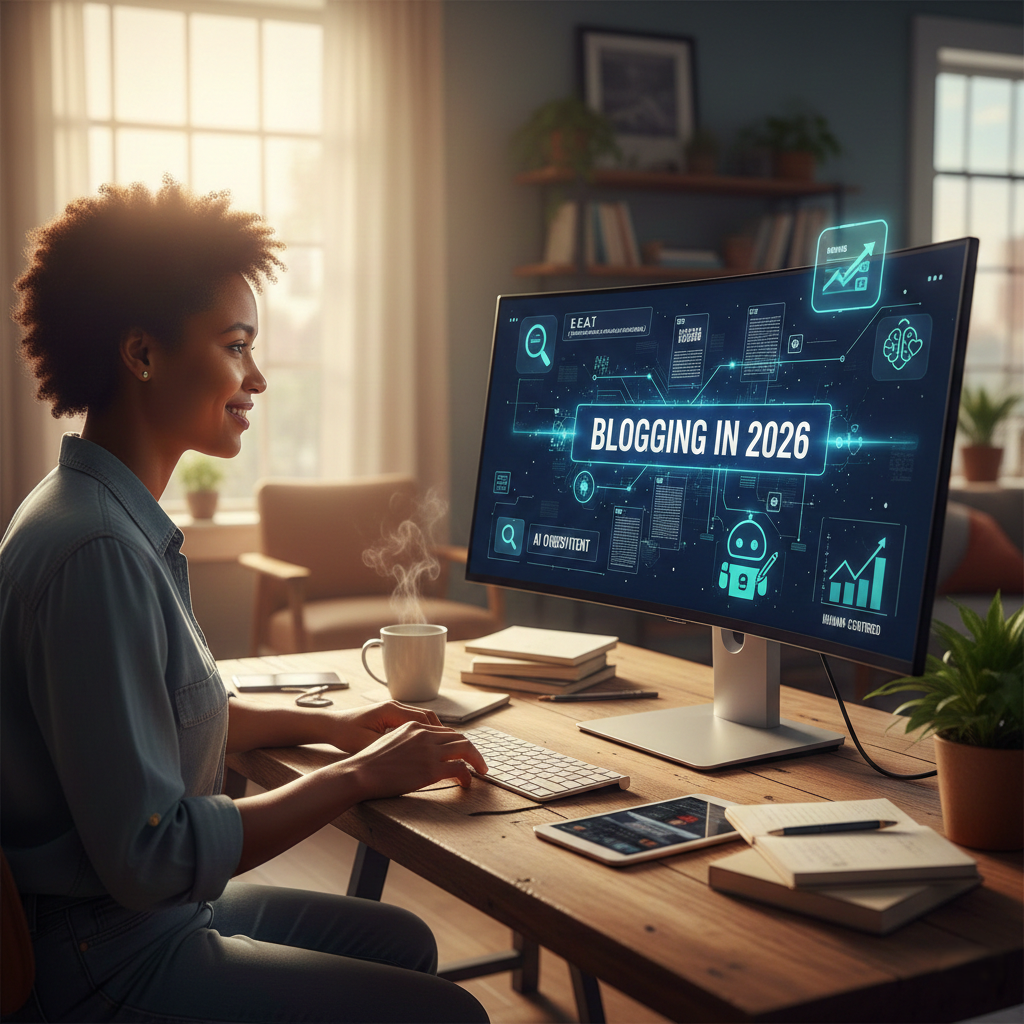
Is blogging dead? Quite the opposite. In an era of “AI slop,” authentic, human-led blogging has become the ultimate currency for trust. However, the old playbook of stuffing keywords into 500-word posts is officially retired. To rank today, you need a mix of E-E-A-T (Experience, Expertise, Authoritativeness, and Trustworthiness) and strategic AI-assisted optimisation.
1. Master the “Search Intent” Strategy
Before you type a single word, you must ask: Why is the user searching for this? Google now categorises intent into four main buckets:
- Informational: “How to start a blog.”
- Navigational: “WordPress login.”
- Commercial: “Best blogging platforms 2026.”
- Transactional: “Buy Bluehost hosting.”
The Pro Tip for blogging: Don’t just target a keyword; target a problem. Use tools like AnswerThePublic or Google’s “People Also Ask” to find the specific questions your audience is losing sleep over.
2. Humanise Your Content (The Anti-AI Approach)
Google’s 2026 algorithms are highly sensitive to “generic” content. To make your blog “Google acceptable” and human-friendly:
- Share Personal Stories: Use phrases like “In my experience” or “What I found during my research.”
- Use Conversational Tone: Write like you’re grabbing coffee with a friend. Ditch the corporate jargon.
- Specific Data over Vague Claims: Instead of saying “many people blog,” say “According to recent 2026 data, 70% of B2B marketers still prioritize long-form articles.”
To truly succeed in 2026, you must align your content with Google’s core quality standards. A critical part of this is understanding the latest updates to the Google Search Quality Rater Guidelines, which emphasize the importance of first-hand experience and topical authority.
3. On-Page SEO Checklist for 2026
To ensure your blog is technically sound, follow this structural hierarchy:
- H1 Header: Include your primary keyword naturally (e.g., “The Ultimate Guide to Blogging for Beginners”).
- The 100-Word Rule: Place your primary keyword within the first 100 words to establish immediate relevance.
- Scannability (H2s & H3s): Use subheadings to break up text. Readers in 2026 scan before they commit to reading.
- Multimedia Integration: Google favours “rich” content. Embed a 60-second video summary or an original infographic to increase “dwell time.”

4. Optimise for “Zero-Click” and AI Overviews
With the rise of AI-generated summaries at the top of search results, you want your content to be the source.
Strategy: Include a “TL;DR” (Too Long; Didn’t Read) summary or a direct “Definition Box” at the start of your article. This increases your chances of being featured in the AI Overview snippet.
ای کامرس کیا ہے؟ 2026 میں فوائد اور کاروبار کیسے شروع کیا جا سکتا ہے اور شروع کرنے کا طریقہ
5. The Power of Internal Linking
Think of your blog as a web, not a series of islands. Link to at least 3-5 of your other relevant posts. This helps Google crawl your site more effectively and keeps readers on your page longer, signalling to search engines that your content is valuable.
Summary Table: Blogging Best Practices 2026
| Feature | Old Way (Pre-2024) | New Way (2026+) |
| Keywords | Keyword Stuffing | Semantic & Latent Intent |
| Length | Fixed (e.g., 500 words) | Intent-based (as long as it needs to be) |
| Author | Anonymous/Generic | Verified Expert with Bio (E-E-A-T) |
| Images | Stock Photos | Original Graphics & Video |
Final Thoughts
Blogging remains the fastest way to turn a stranger into a loyal follower. By focusing on quality over quantity and providing genuine value, you aren’t just writing for an algorithm—you’re building a brand.